


KatKath feline urinary catheter placement
Click on the plus icons to view each part of the placement procedure step-by-step
Step One
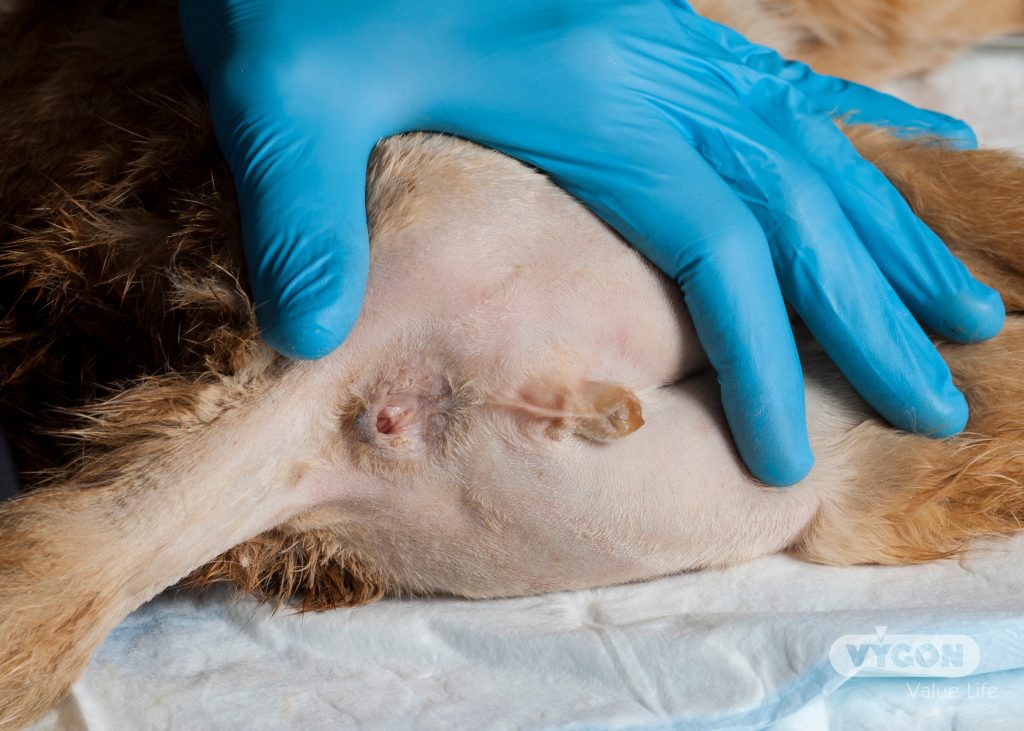 Placement of the urinary catheter in the cat. The male cat will need either sedation or general anaesthesia unless the patient is completely moribund. It may be appropriate to clip the perineum of the cat to allow this to be performed in an aseptic fashion. The extent of the clip here is for photographic purposes.
Step Two
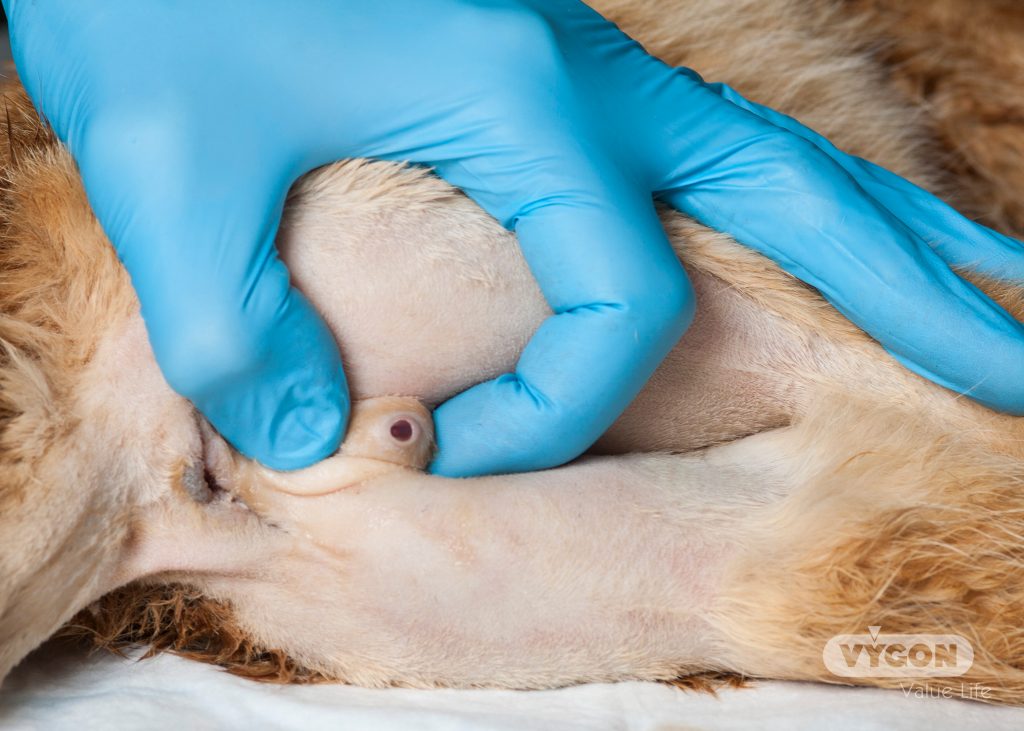 The fingers of the non dominant hand of the clinician are used dorsal and ventral to the preputial orifice to protrude the tip of the penis.
Step Three
 This is the KatKath catheter with the rotating distal cuff.
Step Four
 Sterile lubricant is placed on the tip of the catheter to aid placement.
Step Five
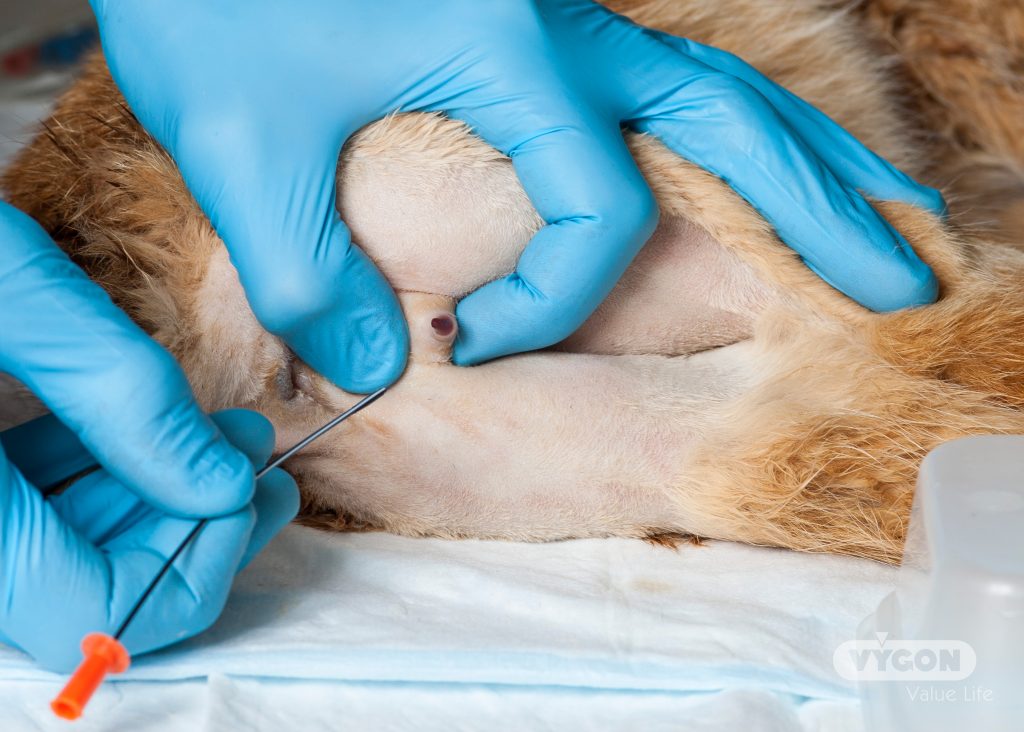 With the tip of the penis protruded by pressure with the non dominant hand, the tip of the catheter is now walked to the urethral orifice.
Step Six
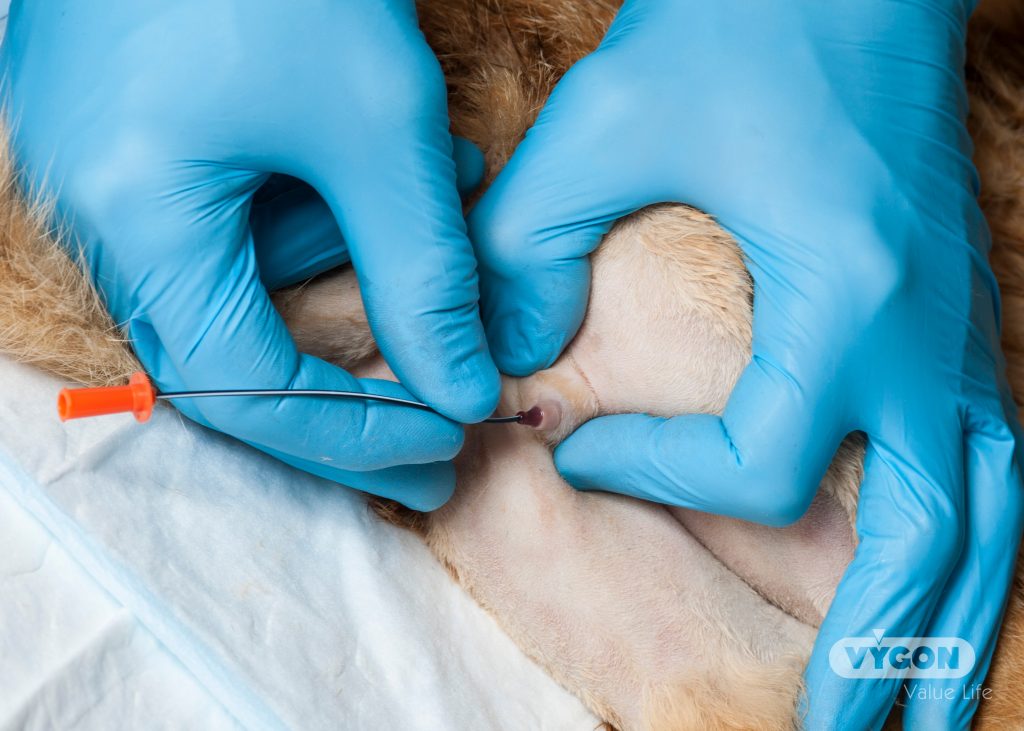 The atraumatic tip of the catheter is then placed within the urethral orifice. This catheter is generally stiff enough to allow placement without the use of a stylet.
Step Seven
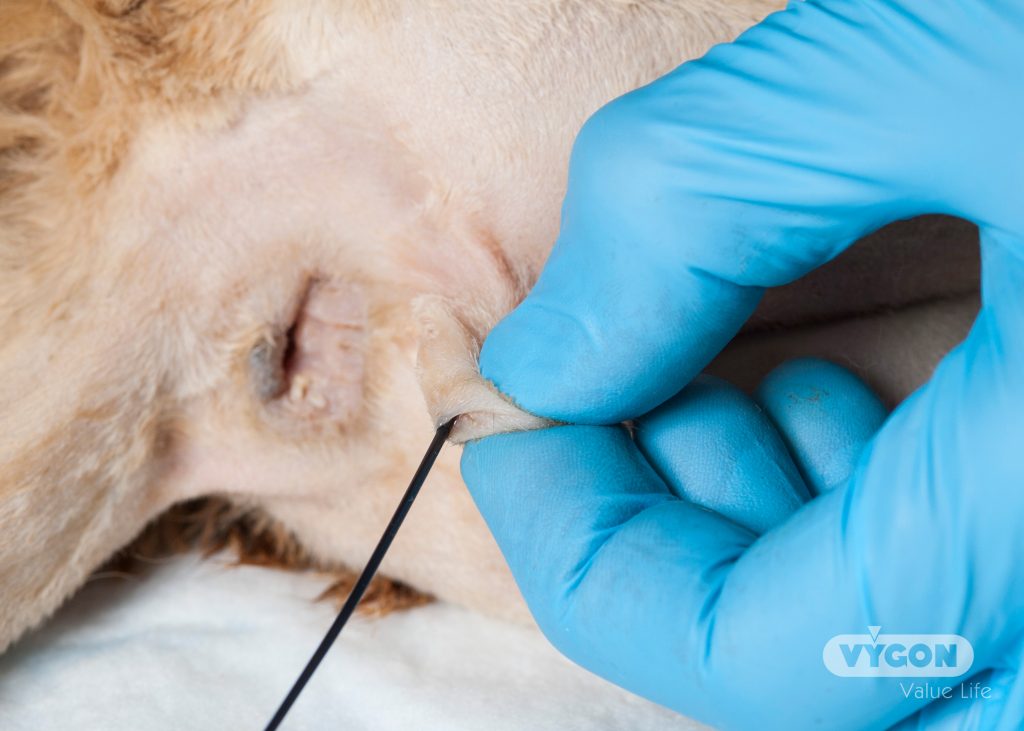 Once the first 2cm of the catheter are within the penile urethra the non-dominant hand is then used to pull the preputial orifice caudally to straighten the urethra and allow the catheter to continue to be inserted through the urethral into the bladder.
Step Eight
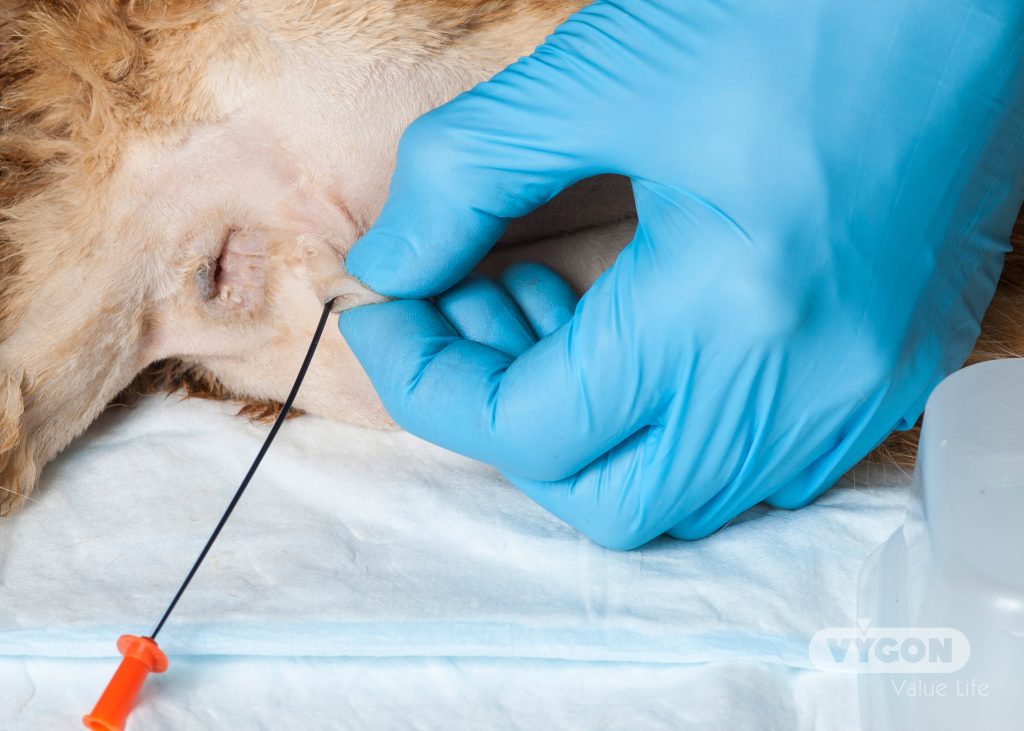 This illustrates how the prepuce is pulled caudally to straighten the urethra during catheter placement. This catheter has a hub, which means that if the urethra is still obstructed by the presence of mucus or sludge a syringe can be connected to the catheter to allow flushing during placement.
Step Nine
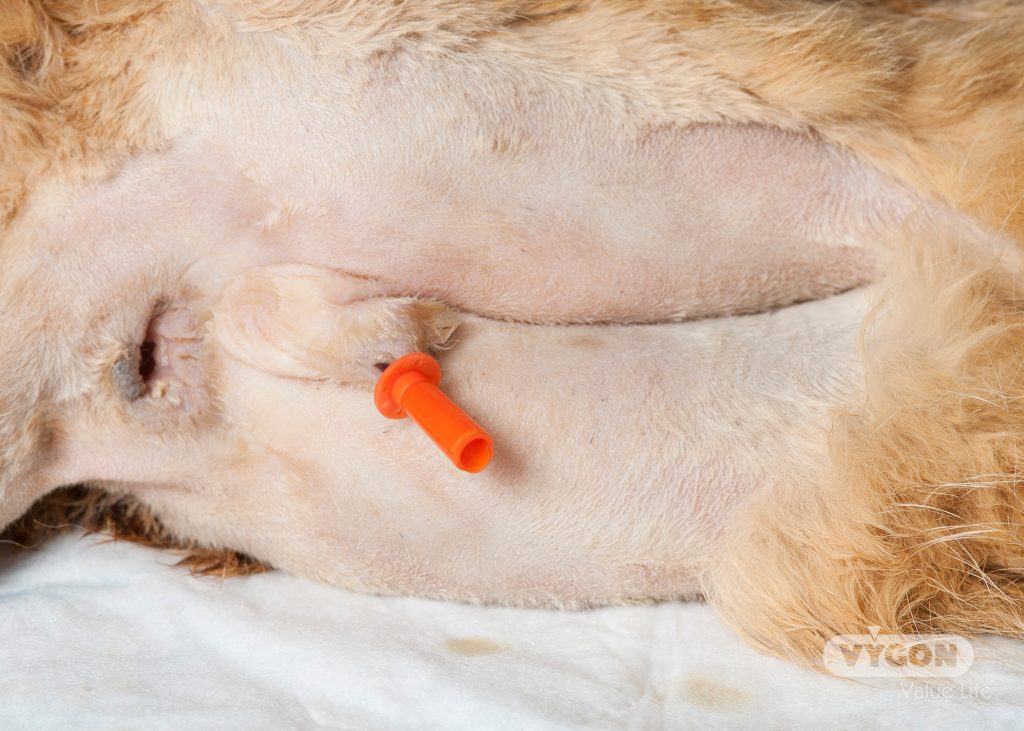 Once any blockage has been released the catheter is inserted completely until the hub of the catheter rests against the prepuce.
Step Ten
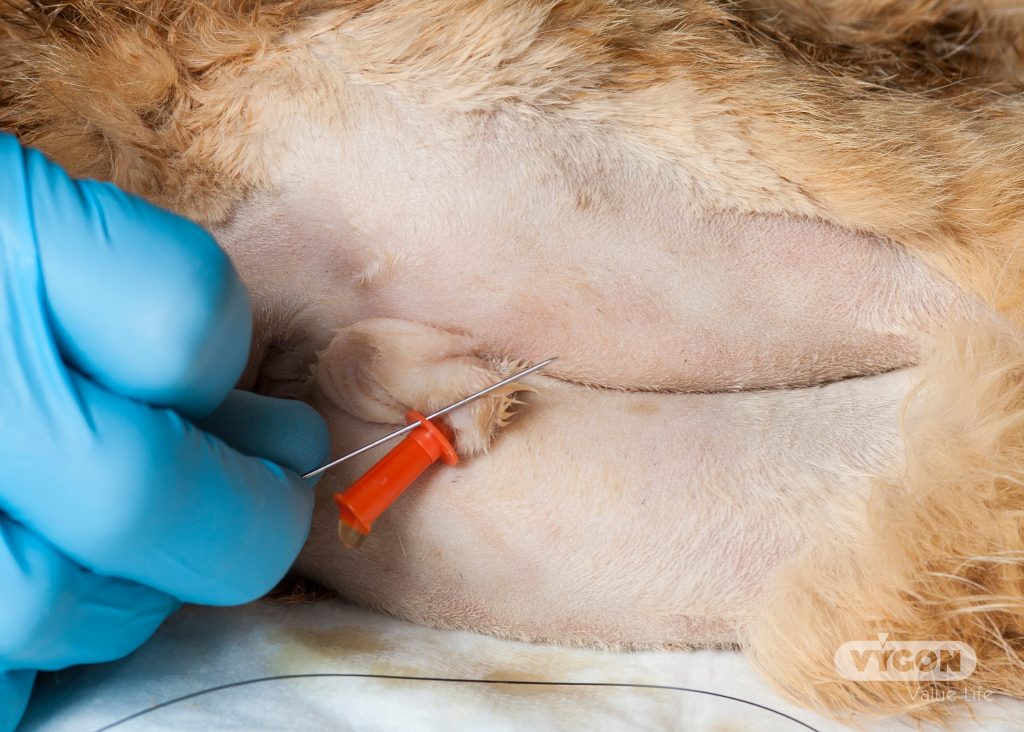 The hub of the catheter has holes provided for suturing the catheter into place. The suture needle is passed through the hole.
Step Eleven
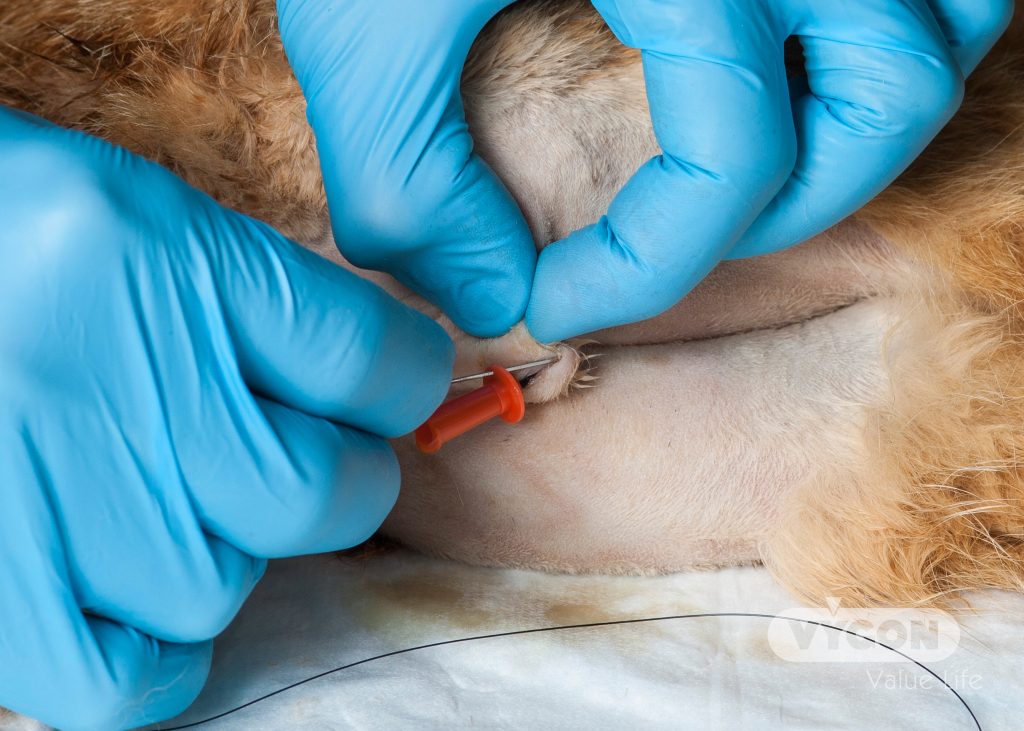 The suture needle is then passed through the skin of the prepuce.
Step Twelve
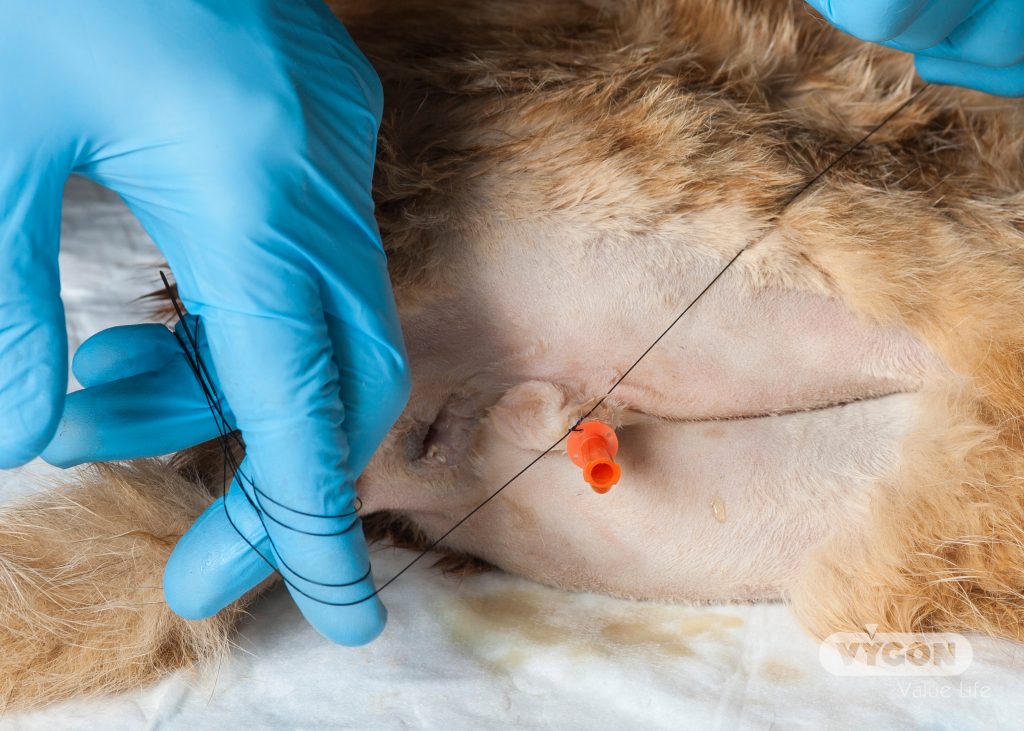 The catheter is secured in place with 2 or more sutures. A standard suture tying technique is used to secure the catheter.
Step Thirteen
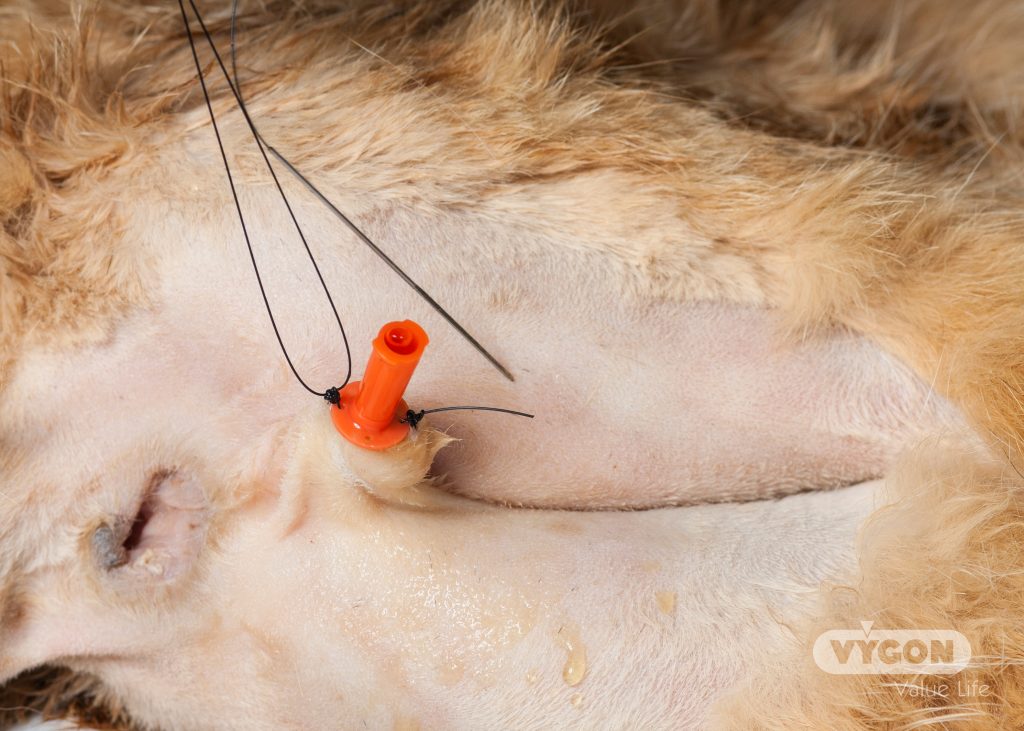 A second suture is placed and the clinician may choose to place additional sutures if they wish.
Step Fourteen
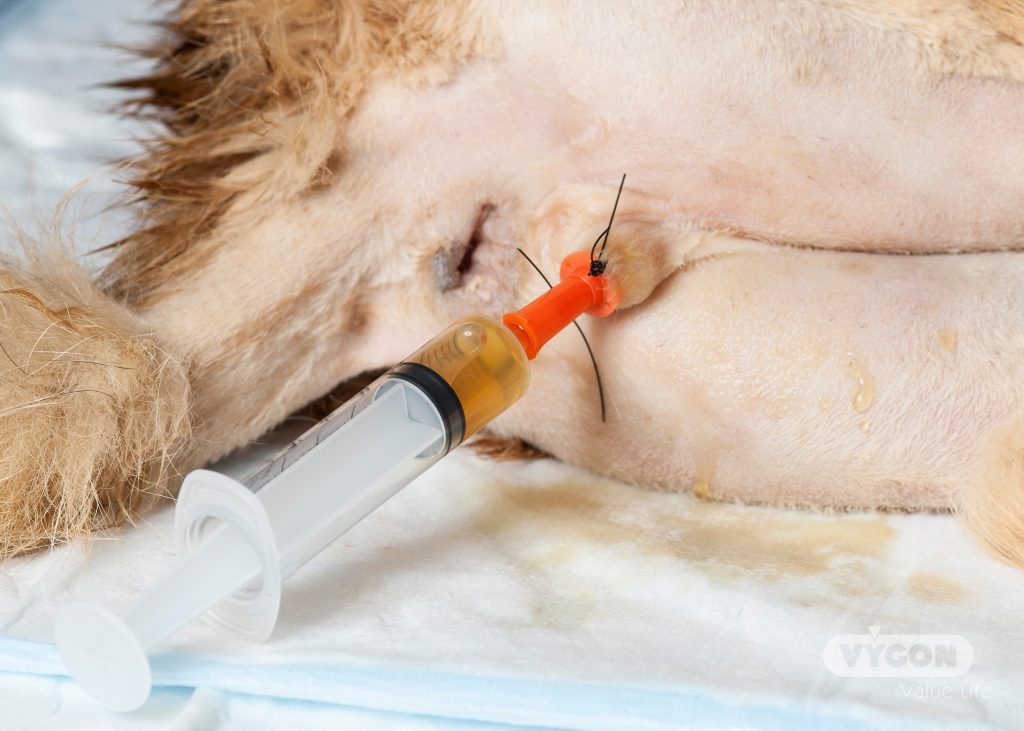 The bladder can now be emptied by connection of a standard syringe to the hub of the catheter and repeated bladder lavage can be performed to reduce the amount of debris present.

